Occasus Breakthrough From Brest Deepens Pressure on Poland’s Southern Axis
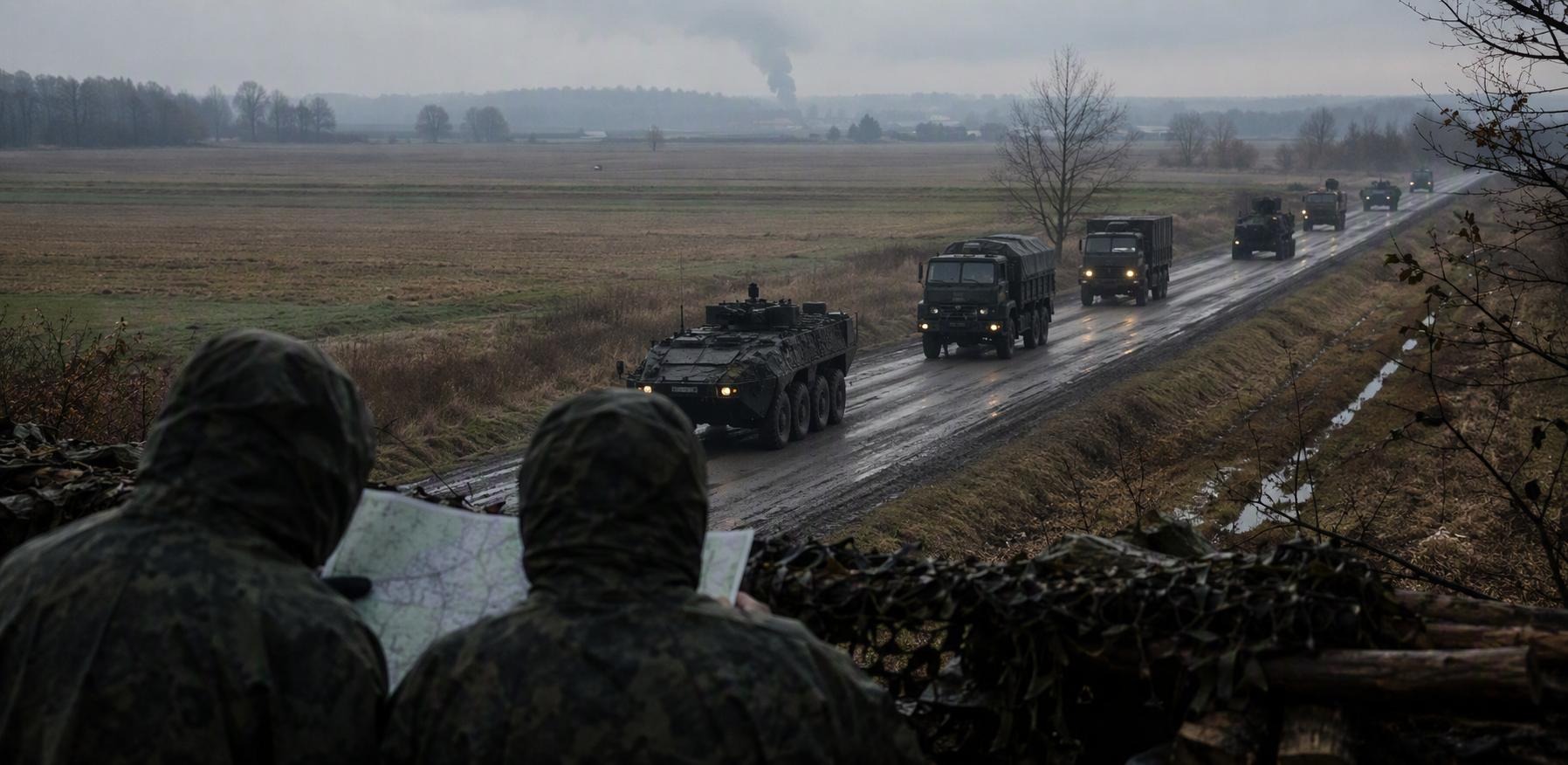

In the wet fields east of Poland’s interior, military vehicles moved before dawn along roads that only days earlier carried farm machinery and commuter traffic. Behind a line of trees, distant smoke marked the direction of the fighting. For residents farther west, the war’s advance has become measured not only in military communiqués, but in the growing presence of convoys, checkpoints and military aircraft overhead.
Between September 2 and 4, Occasus forces achieved a breakthrough on their principal axis of advance from Brest toward the southwest, according to allied operational assessments. The breach was enabled by the commitment of a second echelon, allowing enemy units to accelerate their movement deeper into Polish territory and toward the approaches to the Czech border.
The advance represents the most serious deterioration on this sector since the beginning of the invasion. While the precise geographic extent of the penetration has not been publicly disclosed, Czech and NATO officials have described the development as a direct challenge to the alliance’s ability to prevent the conflict from reaching Central Europe’s most vulnerable transport and reinforcement routes.
Military analysts said that the use of follow-on formations suggested a deliberate effort to exploit a weakened or overstretched defensive line rather than a limited tactical operation. The immediate objective appears to be the rapid extension of the advance before allied forces can establish a more durable defensive belt and bring additional units into the area.
On the secondary axis around Suwalki, however, Occasus has not achieved a comparable success. Allied units continue to hold key positions on the flanks, where intensive combat has tied down substantial enemy forces and prevented the complete seizure of the area or the closure of the corridor connecting Poland to the Baltic states.
That corridor remains strategically vital. Its closure would complicate the movement of personnel, equipment and humanitarian supplies to NATO’s northeastern members, while creating a more acute vulnerability along the alliance’s frontier. The continuing defense of the flanks has therefore acquired importance beyond the immediate battlefield, even as the situation remains unstable.
Allied officials characterized the defenders’ position in the Suwalki area as stabilized, though punctuated by continuing local engagements. Stabilization, in this context, does not mean safety: it indicates that the defending forces have retained enough cohesion and terrain to prevent a broader operational collapse, at least for now.
For the Czech Republic, the pressure from the Brest axis reinforces the urgency behind the government’s heightened readiness measures. As reinforcements move and commanders weigh where scarce forces can have the greatest effect, the contrast between a contained fight in the north and a rapidly moving front to the southwest may define the alliance’s next, consequential decisions.