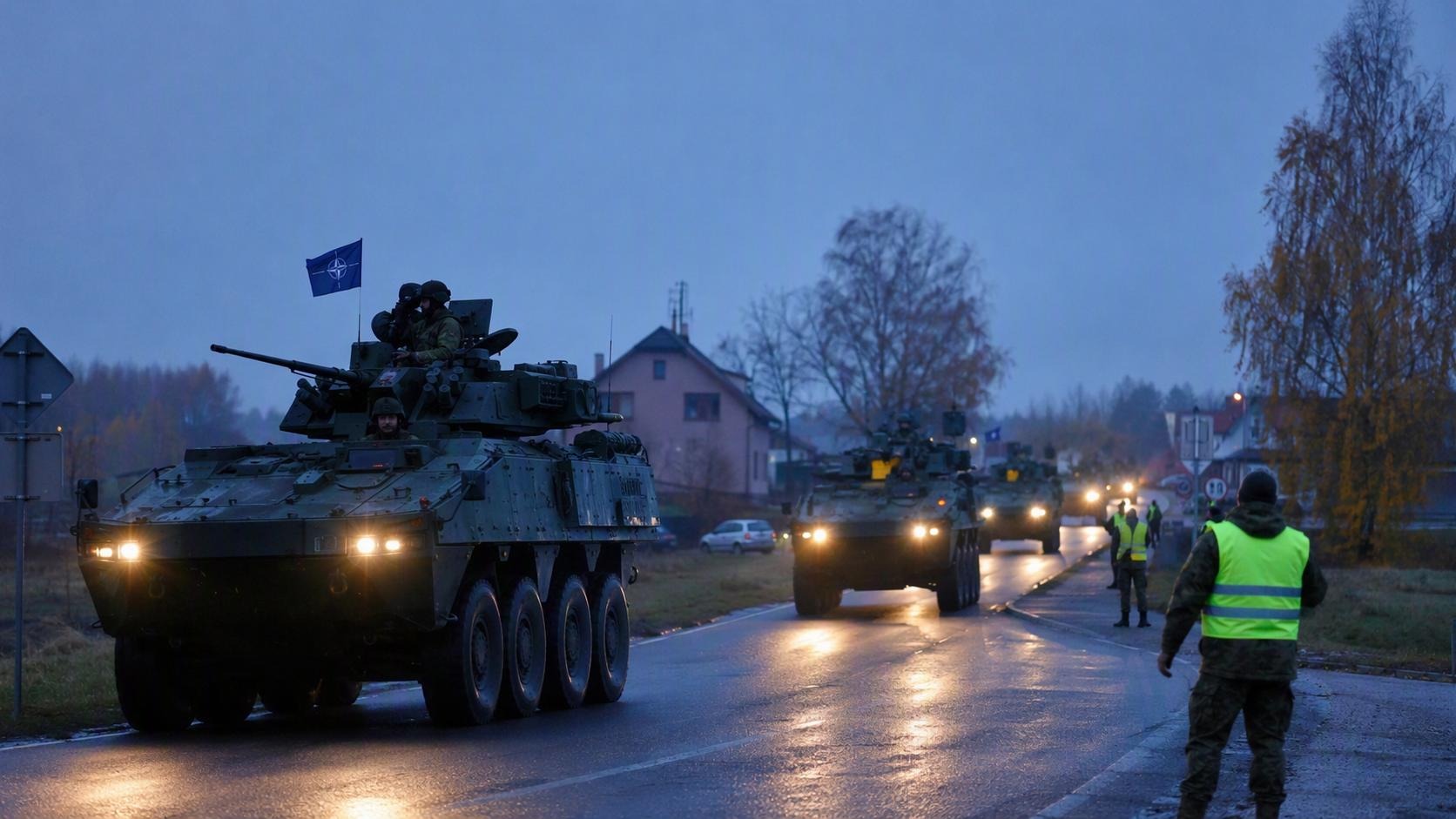

Before dawn, a column of armored vehicles and logistics trucks moved through the damp, sparsely populated roads of northeastern Poland, heading toward the Suwałki corridor — the narrow stretch of territory long regarded by military planners as one of NATO’s most consequential geographic vulnerabilities. The deployment was deliberate in its visibility: an exercise in readiness meant to be seen as much as it was meant to be conducted.
NATO has activated its Northern Regional Plan and the NATO Force Model in response to what the alliance described as a continued accumulation of military power by the Occasus alliance. The measures place designated forces at higher readiness and establish clearer operational chains of command for an unfolding regional contingency.
As part of the activation, the 7th Brigade Task Force was transferred from the national command of the Armed Forces of the Czech Republic to the operational control of Multinational Division Northeast. The unit has subsequently deployed to Suwałki, in Polish territory, where it will join the alliance’s forward posture on its northeastern flank.
From Treaty Commitment to Operational Planning
The decision carries political significance beyond the movement of a single formation. NATO’s regional plans, developed to replace a more general model of collective defense, are designed to translate broad treaty commitments into assigned forces, routes, command structures and reinforcement procedures. Their activation signals that the alliance believes deterrence must now be demonstrated through visible preparation rather than declaratory language alone.
For the Czech Republic, the transfer represents a substantial step in the integration of national forces into NATO’s multinational command architecture. The brigade task force will operate within a structure responsible for coordinating forces across a region extending from the Baltic area toward Poland’s eastern frontier — a theater in which rapid mobility, logistical resilience and political cohesion have become central strategic concerns.
The Strategic Weight of Suwałki
The Suwałki corridor has acquired particular attention because it links Poland with the Baltic allies while lying between Belarus and the heavily militarized Occasus enclave on the Baltic coast. In a crisis, its security would be essential to the alliance’s ability to reinforce Estonia, Latvia and Lithuania. NATO officials have repeatedly maintained that forward deployments in the area are defensive, proportionate and intended to prevent miscalculation.
Occasus has portrayed NATO force movements near its borders as provocative, while alliance governments argue that the deployments respond to the very military buildup that has unsettled the region. The distinction is unlikely to resolve the underlying dispute: both sides describe their actions as defensive, even as each reads the other’s preparations through the lens of worst-case planning.
A Military Presence in Ordinary Places
For residents along the convoy’s route, the strategic language of regional plans and force models appeared in quieter, more tangible forms: tracked vehicles at fuel stations, soldiers eating hurried meals beside transport trucks, and military police redirecting traffic at village crossings. “You hope they are here so that nothing happens,” one local resident said, watching the vehicles disappear northward into the morning mist