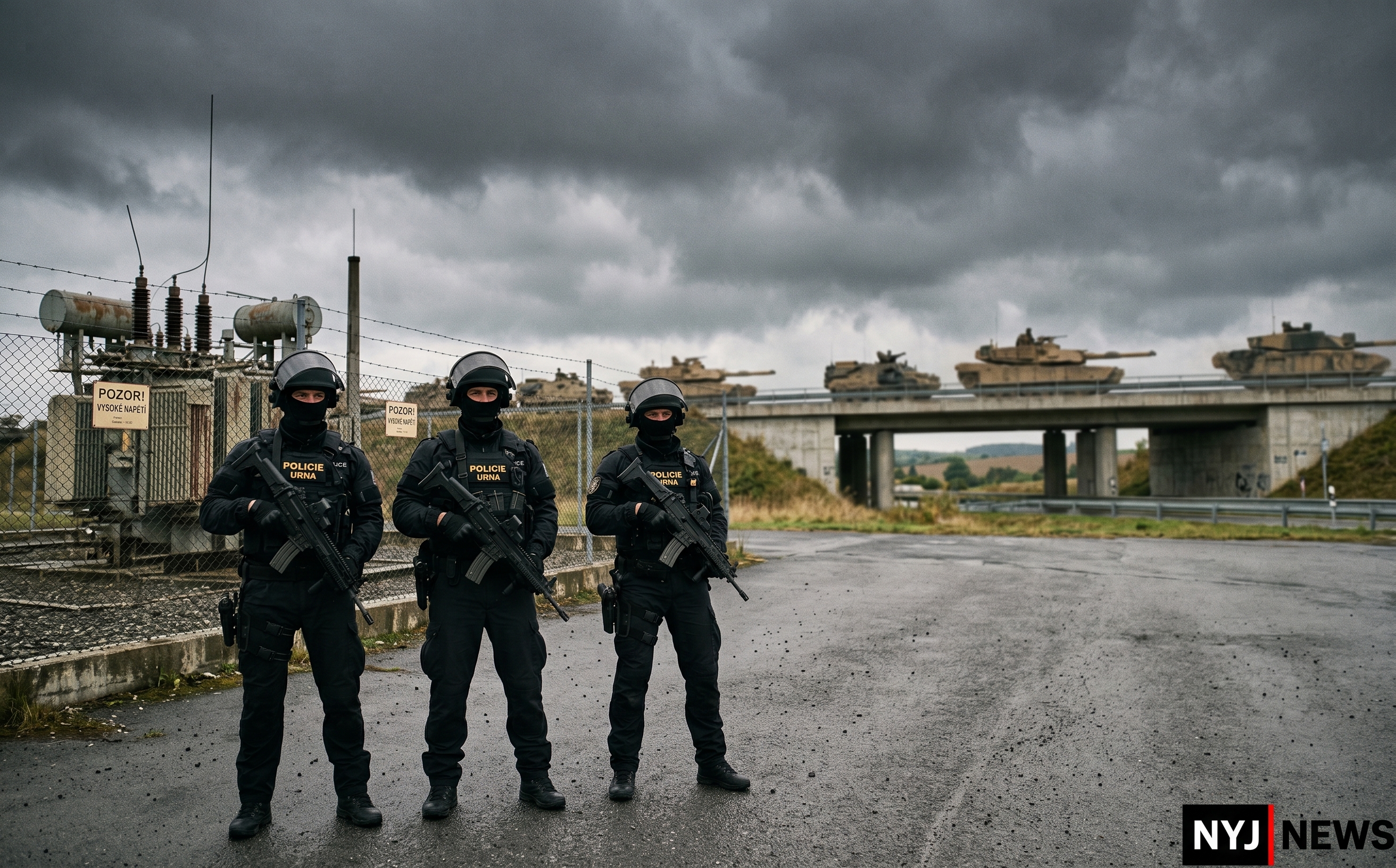

THE HOME FRONT UNDER THREAT: Czechia Becomes a Direct Staging Area as the State Faces Crushing Hybrid Attacks
Czechia’s New Role: A Logistical Hub Under Hacker Fire
As the frontline relentlessly and dangerously shifts to the southwest, the geopolitical reality of the Czech Republic has radically changed. The country now finds itself in the direct operational rear of the Allied forces in the northeast. While massive and extensive movements of Allied troops toward the front take place across Czech territory day and night, the state is facing intensified hybrid pressure. The attackers are not just waging war with conventional weapons; security forces report a critical surge in hybrid attacks targeting critical infrastructure, with the energy, transport, and telecommunications networks taking the heaviest hits. Simultaneously, the information space is under massive assault aimed at disrupting the internal stability of the state.
Protecting the State: Police on Highest Alert and Combating Crime
The escalating domestic situation has necessitated stringent measures under the banner of a declared state of emergency. The Police of the Czech Republic have been granted extraordinary powers and tasked with reinforcing the physical protection of critical infrastructure, strategic facilities, and healthcare institutions. Police units are intensively maintaining public order and strictly regulating the movement of people in high-risk areas, particularly in light of the intensifying migration pressure on the Polish border. Furthermore, police officers and investigators are dealing with security incidents, cyberattacks, and criminal activities directly linked to the ongoing hybrid threats.
Preparing for the Worst: Firefighters as the Backbone of Crisis Management
The Fire Rescue Service of the Czech Republic (HZS) is playing an indispensable and often unseen role in keeping the state functioning. Firefighters have been deployed to conduct preventive security inspections of selected facilities and provide essential technical support for crisis measures. The service is on the highest alert, ready to respond to emergencies that could have direct physical impacts on the civilian population. Concurrently, the HZS is participating in the protection of critical infrastructure elements and, in close coordination with other branches of the Integrated Rescue System (IZS), is supporting large-scale evacuation and humanitarian operations.
A Grueling War: The Future Depends on Stabilizing the Front
According to military strategists, the current course of events unequivocally confirms that the conflict has definitively entered a phase of prolonged, high-intensity attrition warfare. Ensuring the internal security of the state, protecting the population from hybrid threats, and executing effective crisis management have become absolutely integral components of the overall defense framework, just as critical as the military operations on the main front. The subsequent development and survival of the region will now depend critically on NATO’s ability to rapidly stabilize the collapsing front along the Oder-Ostrava line, ensure a steady flow of reinforcements, and effectively counter internal destabilization activities.