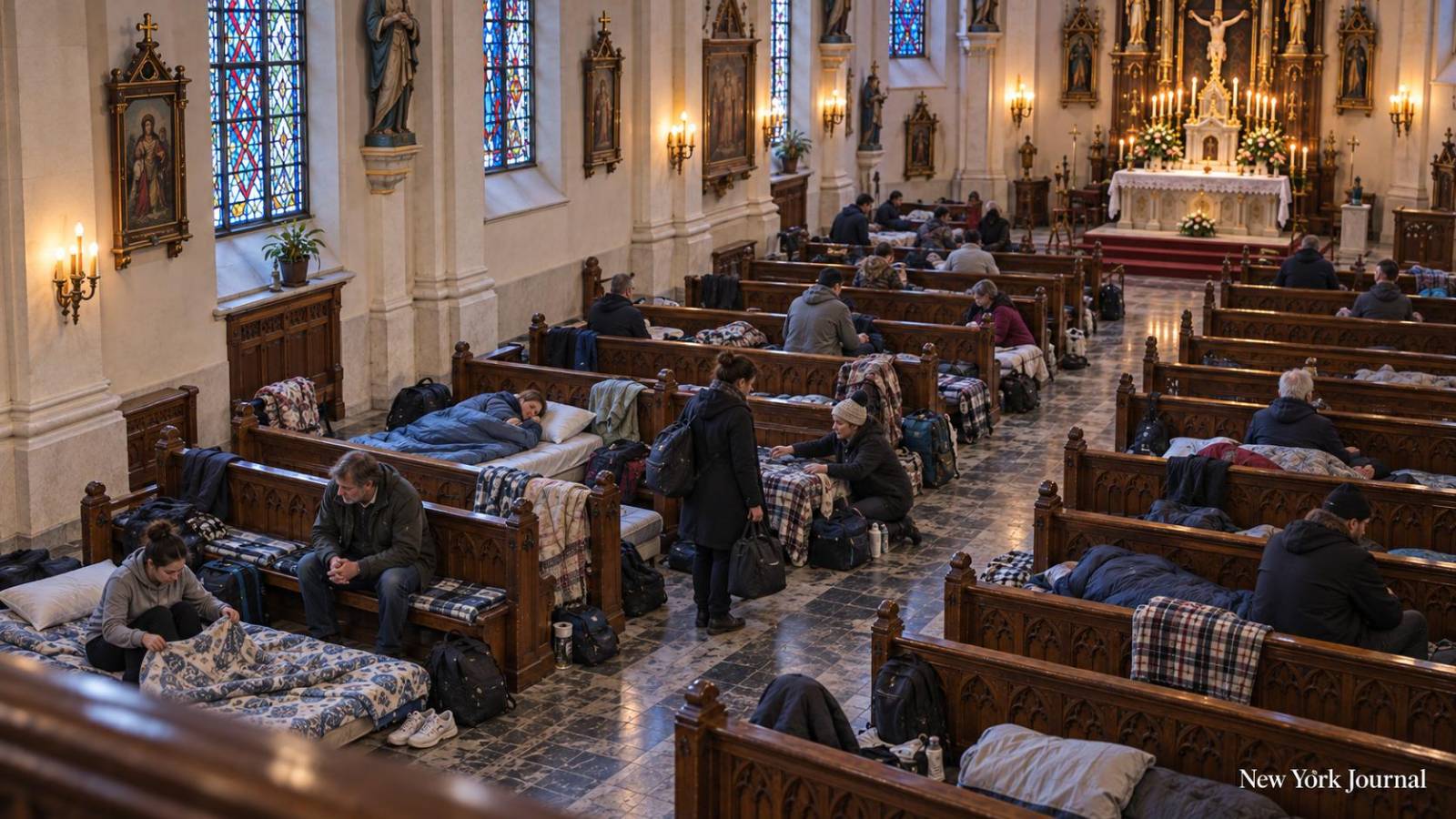

Several residents have developed symptoms consistent with a viral infection, according to volunteers and local officials, intensifying concern over sanitation and access to medical care.
A Quiet Church, an Anxious Morning
Before dawn on Tuesday, a woman carrying a small child stood beneath the covered entrance of the church in Stará Voda, watching volunteers carry cartons of bottled water through a side door. Inside, several people living in an unauthorized shelter had reported fever, coughing and gastrointestinal symptoms, according to two people assisting at the site. No diagnosis has been confirmed, but the reports have quickly prompted fear among residents already living in cramped and precarious conditions.
The shelter, organized by the church caretaker without formal authorization from municipal or health authorities, has become a refuge for people displaced by the widening security crisis. Its precise population remains unclear. Volunteers estimate that several dozen people have slept in the church and adjoining rooms in recent days, though that number may fluctuate as families arrive, leave or seek transport elsewhere.
Sanitation Concerns Long Preceded the Symptoms
Accounts from people familiar with the shelter describe serious deficiencies in hygiene and sanitation infrastructure. Access to toilets is limited, hand-washing facilities are inadequate for the number of residents, and supplies of soap, disinfectant and clean bedding have reportedly been inconsistent. Such conditions do not establish the presence of a particular disease, public-health specialists caution, but they can sharply increase the risk that common respiratory or gastrointestinal illnesses will spread.
A local resident who brought food to the church said that anxiety had begun to eclipse the initial sense of solidarity. “People are frightened not only of becoming sick, but of being told they must leave with nowhere to go,” the resident said. Several families have reportedly tried to keep children apart from those who appear unwell, an almost impossible task in a space not designed to house a large civilian population.
Officials Seek Access to the Site
Municipal officials said they were seeking to establish contact with those responsible for the shelter and arrange an assessment by health personnel. They stressed that the priority was to identify anyone requiring urgent care, provide basic testing where appropriate and reduce the risk of further transmission, rather than to treat sick and displaced people as a public-order problem.
The local public-health authority urged anyone experiencing high fever, breathing difficulties, severe dehydration or a rapidly worsening condition to seek emergency assistance immediately. It also recommended temporary isolation for symptomatic residents where possible, ventilation of shared rooms, frequent hand-washing and the distribution of masks for people with respiratory symptoms. In a crowded improvised shelter, however, these recommendations can sound less like instructions than like an inventory of what is missing.
The Strain on Informal Aid Networks
The situation has exposed a broader vulnerability in communities receiving displaced people outside the formal emergency system. Across the country, churches, private homes and volunteer networks have absorbed people moving away from areas affected by conflict and disruption. Many offer indispensable help, but they often operate without the medical oversight, sanitation capacity or stable funding available at official reception facilities.
The church caretaker’s decision to open the building appears to have arisen from an immediate humanitarian impulse, according to people acquainted with the situation. Yet the episode illustrates the difficult boundary between spontaneous assistance and a shelter operation that requires trained staff, safe accommodation, registration procedures and reliable access to health services. Authorities have not indicated whether they intend to close the site, relocate its residents or bring it under formal supervision.
For now, the church’s stone walls contain an uncertainty more consequential than the rumors circulating outside: whether the reported illness is a limited cluster of ordinary viral infections or the beginning of a wider outbreak among people with few places left to go. “They need a doctor and a place to wash, not another reason to be afraid,” one volunteer said as the morning deliveries continued.