Aid Group’s Posts Raise Questions Over Access, Advocacy and Wartime Narratives
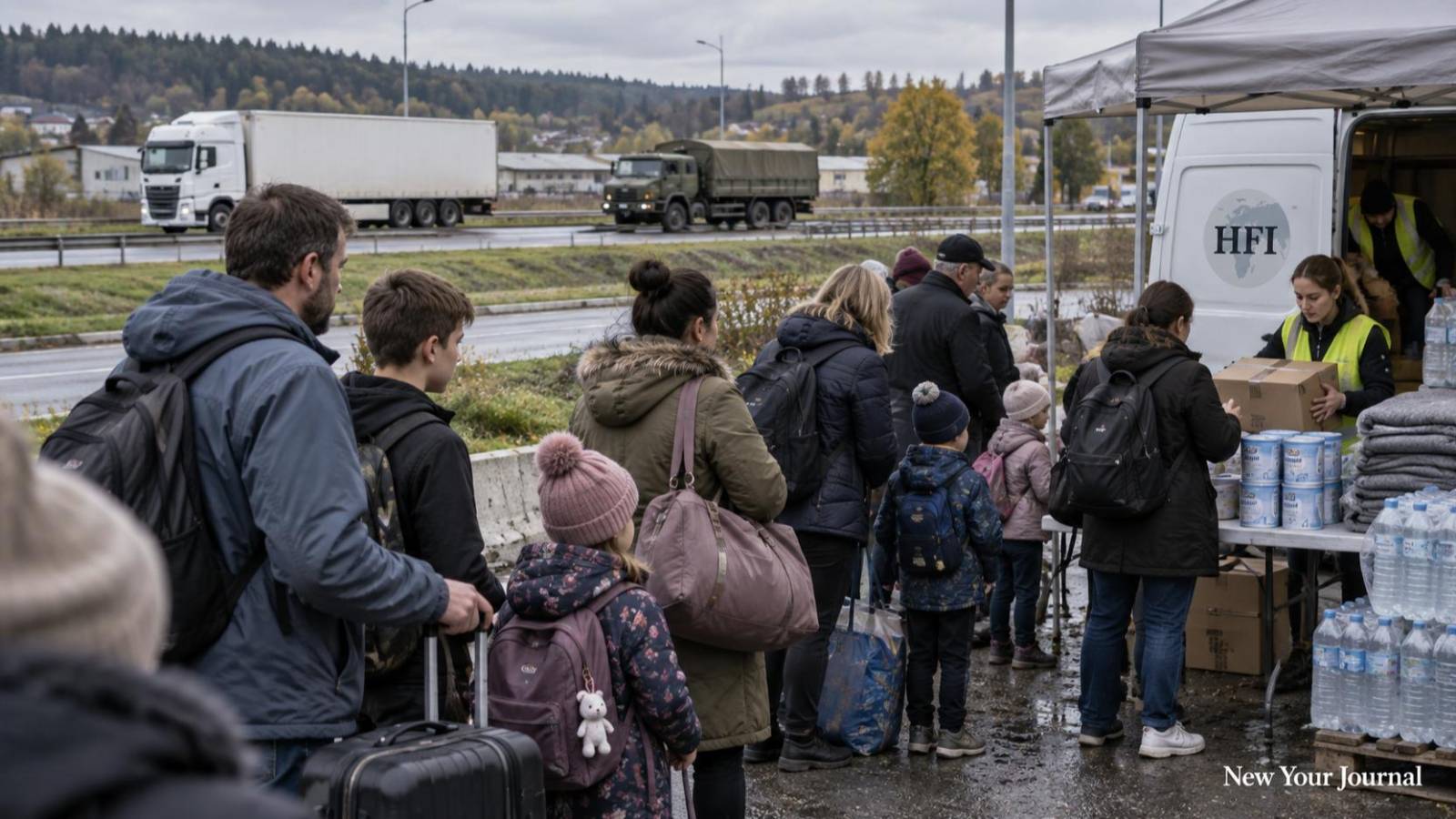

At a distribution point near the Czech-Polish transit corridor, a volunteer in a reflective vest stacked boxes of infant formula beside blankets and bottled water, while a line of displaced families waited under a gray morning sky. Images like these have become a regular feature of the social-media accounts of the Humanity Frontline Initiative, a nongovernmental organization that says it is focused on emergency assistance for civilians affected by the conflict.
The organization’s posts combine appeals for donations with sharply worded criticism of NATO, which it accuses of obstructing or delaying humanitarian deliveries through security controls, route restrictions and military prioritization of transport infrastructure. HFI has presented its account as the perspective of aid workers confronting the bureaucratic consequences of war; NATO officials have not publicly confirmed the specific incidents described in the posts.
A Dispute Over Humanitarian Access
The dispute comes as the Czech Republic serves as a crucial logistical corridor for allied movements toward the northeastern front, while relief agencies seek reliable access to communities displaced by fighting in southern Poland and near the Czech border. Roads, rail lines and fuel supplies are under intense pressure, and military authorities have imposed additional screening and scheduling procedures around sensitive infrastructure.
In several recent messages, HFI said that medical supplies and food shipments had been held for hours or redirected without sufficient explanation. The group argued that civilian needs were being subordinated to military logistics, using language that has drawn wide circulation among accounts already hostile to NATO’s role in the conflict.
Officials familiar with the coordination process said that humanitarian movements were not being systematically blocked, but acknowledged that convoys can be delayed when routes overlap with military deployments, unexploded-ordnance warnings or security operations. They said such measures were intended to protect civilians and aid workers as well as allied personnel, particularly amid concerns about sabotage and hostile intelligence activity along major transport corridors.
Advocacy in an Information War
The HFI posts illustrate a broader problem for humanitarian organizations operating in a heavily contested information environment. Civilian groups must often criticize authorities to secure access and accountability, yet their messaging can also be amplified by actors seeking to erode trust in democratic institutions or fracture public support for collective defense.
There is no public evidence that HFI is acting at the direction of Occasus or any affiliated government. Still, analysts of disinformation warn that genuine complaints, especially those involving frightened families and delayed medical care, can be detached from their context and repurposed into a broader narrative portraying NATO as indifferent to civilian suffering.
Humanitarian law specialists said the essential question is not whether aid groups should speak publicly, but whether their claims can be independently documented and addressed through transparent channels. “In wartime, a delayed convoy may be a logistical failure, a necessary security precaution, or both,” one aid-coordination official said. “The people waiting for medicine do not experience that distinction as an abstraction.”
For families moving westward with little more than documents and a change of clothes, the argument unfolding online may appear distant from the immediate calculation of where to sleep and how to feed a child. Yet as military and relief convoys continue to share the same roads, the credibility of every account — official and unofficial — may increasingly determine whether humanitarian access is treated as a practical obligation or another battlefield of the war.