"Where Are We Supposed to Go?”: Shelter Anxiety Draws Civilians to Czech Army Liaison Center
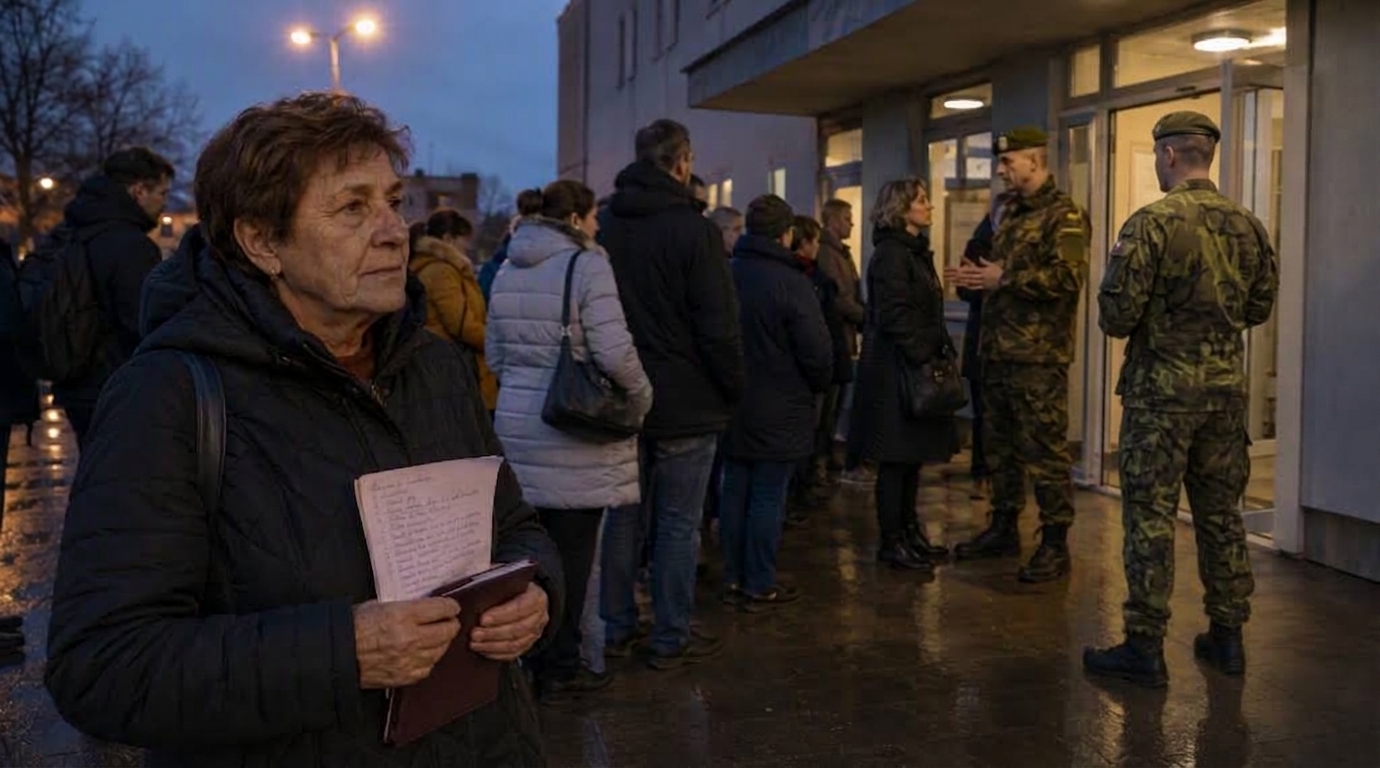
By late afternoon, a line had formed outside a civil-military cooperation center operated by the Czech Armed Forces. Some people carried folders of property documents and medication lists; others had arrived directly from work. Their questions were blunt: If the fighting moves closer, where are civilians meant to shelter, and why has the government not ordered an evacuation?
The gathering reflects widening public anxiety as the war in Poland continues to press toward the Czech border and military movements through the country become a daily feature of life. While officials have stressed that the Czech Republic remains under NATO protection and that emergency planning is active, many residents say reassurances have not answered the practical question of what to do in the first hours of a crisis.
The concern over shelters has exposed a long-standing weakness in Central Europe’s civil-defense infrastructure. Many purpose-built public shelters date to the Cold War, were later decommissioned or converted to other uses, and may not be equipped or accessible for large numbers of people at short notice.
A woman leaving the liaison center said she had come not to demand guarantees, but clarity: whether her apartment building’s basement was suitable, whether elderly relatives should leave voluntarily and which warning signals should lead people to seek immediate cover. “Everyone tells us not to panic,” she said, “but nobody can tell us what the plan looks like from our street.”
Emergency-management specialists have long argued that civil protection cannot rest on underground shelters alone. It also requires functioning warnings, reliable communications, protected medical capacity, continuity of water and electricity, and public guidance that citizens can understand under pressure. The government’s challenge is therefore logistical and communicative: balancing the avoidance of unnecessary alarm against the public’s legitimate demand for concrete information.
For now, the queue outside the military center has become a small illustration of a larger wartime reality. Civilians are asking not only whether the state has plans on paper, but whether they can trust and act on them before a distant emergency becomes a local one. “People can endure uncertainty,” an older resident said, folding a handwritten list of questions into a coat pocket. “What they cannot endure is being left alone inside it.”