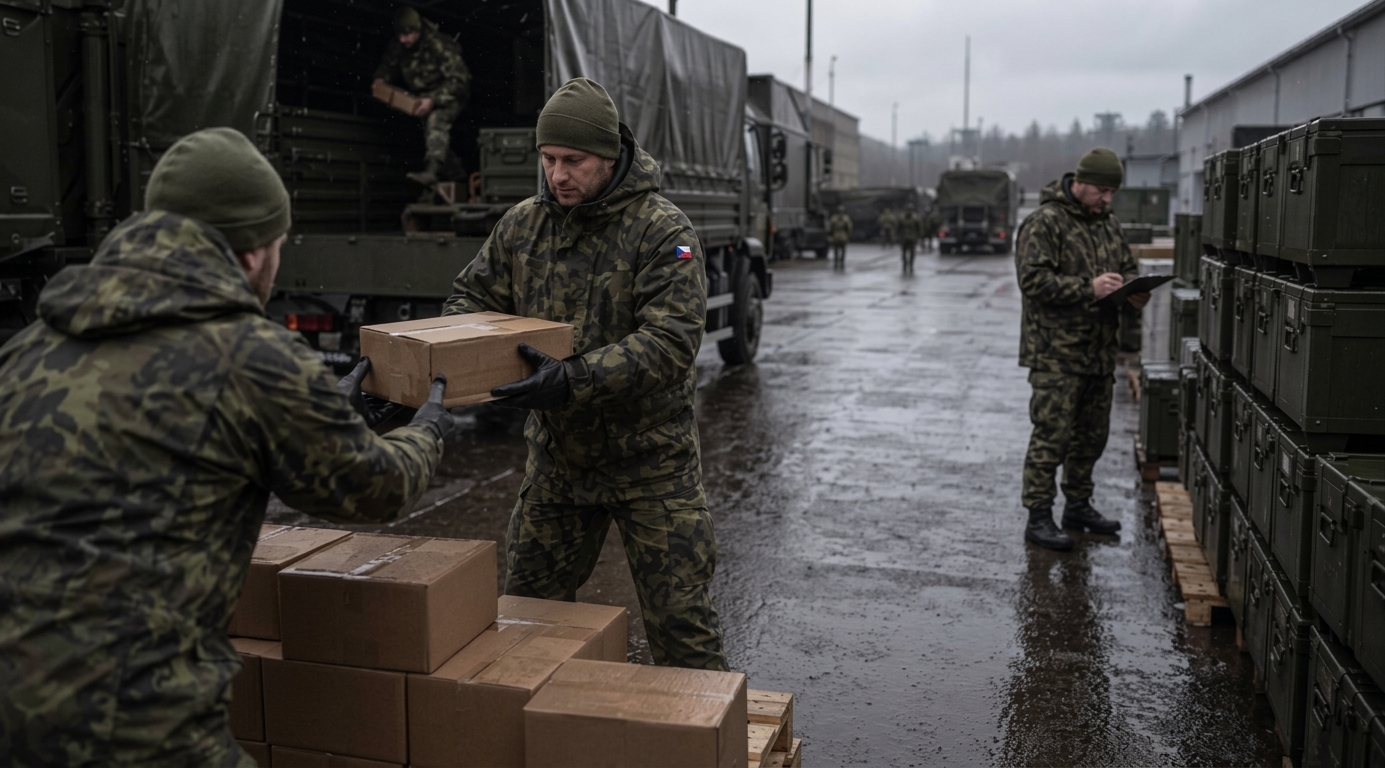

In a temporary staging area near the northeastern transit corridor, a Czech soldier stood beside an idling military truck on Tuesday morning, watching a small pallet of ration boxes being divided among several units. The work was methodical and quiet, according to a report by the Czech news agency NTV, but the scene reflected a concern now increasingly voiced by personnel: supplies meant to sustain a prolonged national mobilization are arriving unevenly.
NTV reported that morale among some Czech troops has declined amid persistent logistical difficulties, including shortages of food and ammunition. The report did not establish how widespread the shortages are across the armed forces, but it cited soldiers serving in units involved in transport, infrastructure protection and preparations for possible deployment toward the Polish border.
The allegations emerge as the Czech Republic absorbs the strain of becoming a principal transit and support route for allied forces moving northeast following Occasus’s invasion of Poland. Rail lines, highways, depots and fuel networks have been placed under exceptional pressure, while the military has simultaneously expanded its domestic security responsibilities under the state of emergency.
A shortage of food is not merely a question of comfort in military operations. Regular meals, reliable rest rotations and predictable resupply are fundamental to unit cohesion, particularly for reservists and personnel reassigned from civilian life into an environment of long shifts and uncertain schedules. Ammunition shortages carry still more immediate consequences, affecting both training standards and commanders’ confidence in their units’ readiness.
Military analysts say that such problems need not indicate a collapse of the Czech defense effort. Rather, they argue, the country is confronting a difficult transition from a peacetime logistics system—designed around smaller standing formations and scheduled procurement—to the demands of sustained collective defense. Ammunition production, field catering, vehicle maintenance and secure distribution networks cannot be expanded simply by declaring an emergency.
For soldiers, however, the distinction between a temporary bottleneck and a systemic failure may feel academic. NTV’s report described frustration among troops who have been asked to maintain a high operational tempo while receiving limited information about when conditions will improve. In an armed force dependent on trust between ranks, uncertainty can spread faster than any physical shortage.
The test for Czech authorities will now be whether they can address those concerns with transparent assessments and visible improvements, rather than assurances alone. “You can endure difficult conditions when you know the system sees you,” a soldier said. “What is harder is not knowing whether the next delivery will come at all.”