Swiping Left, Pacing Right: Why New York’s Singles Are Trading Dating Apps for Run Clubs
Hinge is exhausted. Bumble feels like a part-time job. If you ask any single New Yorker about the state of the apps in 2026, the consensus is grim: the era of the endless swipe is over. But the desire to meet someone hasn’t vanished; it’s just relocated.
To find the city’s hottest singles scene, you don’t need a reservation at the latest exclusive cocktail bar. You just need a decent pair of Hokas and a tolerance for chafing. Welcome to the era of the dating run club.
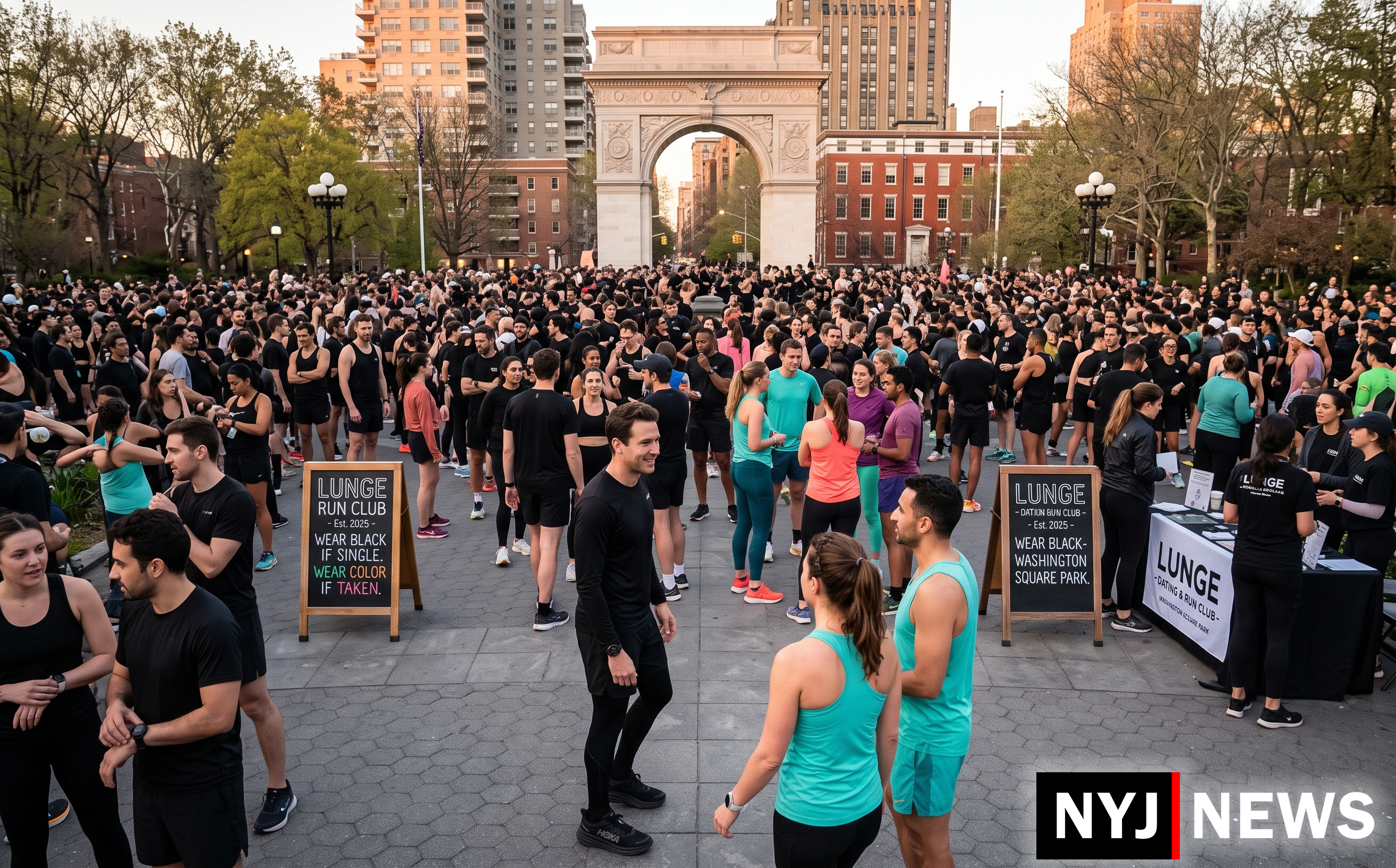
Nowhere is this shift more visible than at the Lunge Run Club. On a typical Wednesday evening in Washington Square Park, you won’t just find a few dozen joggers stretching. You will find a buzzing sea of over 1,200 people.
The dress code here serves a highly specific, tactical purpose: runners wear all black to signal that they are single and looking, while those who are taken come dressed in color. It is a massive, analog status update. The club kicks off with a conversational three-mile jog (or a 1.5-mile walk for those less inclined to sweat), but the real finish line is the nearby bar where the group descends post-run to actually talk.
“I’m looking to find a wife tonight,” one Lunge runner boldly confessed, noting that his parents were eager for him to settle down.
According to Steve Cole, co-founder of the club and the companion Lunge app, the appeal is seeing people in their most authentic, unedited state. “If you kind of look across the crowd, you see some people talking about eyes, smiling, flirting, and we see all of that happen in real life,” Cole notes.
The data backs up this cultural pivot. According to Strava’s Year in Sport report, global run club membership has recently surged by a staggering 59%. Most impressively? One in five runners reports having gone on a date with someone they met at a run club.
Psychologists and dating experts say this trend isn’t just a coincidence—it’s rooted in how we form connections. Running effectively bypasses the awkward, hyper-curated facade of a dating app profile.
• The Side-by-Side Effect: Running places people shoulder-to-shoulder, stripping away the intense, interview-style eye contact of a traditional first date over drinks.
• Behavioral Transparency: You can tell a lot about a person by how they handle discomfort. Do they wait for slower runners? Do they complain when it rains? Exercise is effectively the most honest personality test available.
• The Endorphin Advantage: Physical exertion triggers an endorphin release, making you naturally perceive the people around you more positively.
There is also a profound relief in the “order of operations.” On an app, you judge a curated photo, match, text endlessly, and eventually meet a stranger who may or may not resemble their profile. At a run club, you experience the real person first. You see them sweaty, makeup-free, and out of breath. If you still find them charming while they’re gasping for air at a stoplight on the West Side Highway, the foundation is undeniably solid.
Of course, the scene isn’t perfect. As these clubs swell into the thousands, some veteran runners grumble about the “oversaturation” of singles treating the pavement like a meat market. But for the weary dater, it offers something a screen never could: an excuse to get out of the apartment, a guaranteed endorphin rush, and the distinct possibility of literally running into someone special.