The Office Renaissance: How Manhattan’s Commercial Real Estate is Adapting to the Hybrid Era
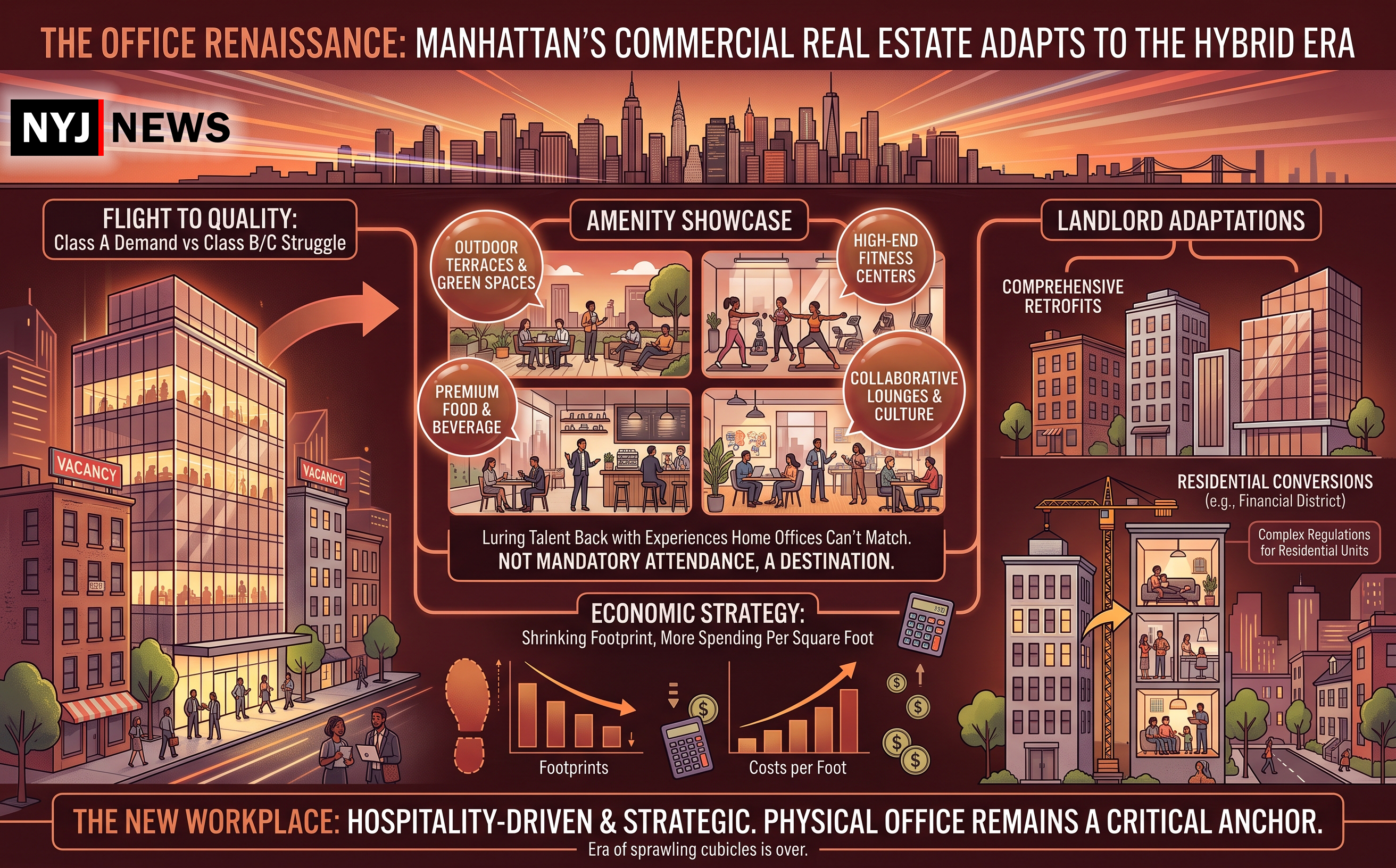

The narrative surrounding Manhattan’s commercial real estate market has been dominated by a singular, persistent question: Is the office dead? As hybrid work schedules solidify into permanent corporate policies, the answer emerging from the latest market data is a resounding no. The office is not dead—but it is undergoing a radical, high-stakes evolution.
We are currently witnessing a massive “flight to quality” across the city’s commercial sector. While older, Class B and Class C office buildings struggle with mounting vacancy rates, Class A properties—particularly those boasting state-of-the-art amenities, sustainable design, and prime locations—are seeing robust demand. Employers have realized that to lure talent back to the physical workplace, the office must offer an experience that the home office cannot.
“Companies are shrinking their overall square footage, but they are spending significantly more per square foot,” explains David Sterling, a senior commercial broker in Midtown. “They want outdoor terraces, high-end fitness centers, premium food and beverage options, and collaborative lounge spaces. The office is transitioning from a place of mandatory attendance to a destination for culture and collaboration.”
This polarization is forcing landlords of older buildings to make difficult calculations. Many are investing heavily in comprehensive retrofits to compete for top-tier tenants. Others are navigating the complex, expensive regulatory pathways to convert vacant office spaces into desperately needed residential units, a trend that could permanently alter the demographic makeup of neighborhoods like the Financial District.
The Manhattan skyline is adapting to a new economic reality. The era of the sprawling, cubicle-filled floor plan is over, replaced by a strategic, hospitality-driven approach to the workplace. As businesses continue to crack the code on hybrid work, the physical office remains a critical anchor—it just looks, feels, and functions differently than it did before.