Goodbye, 18th Hole: Why Wall Street is Trading Country Clubs for Pickleball Courts
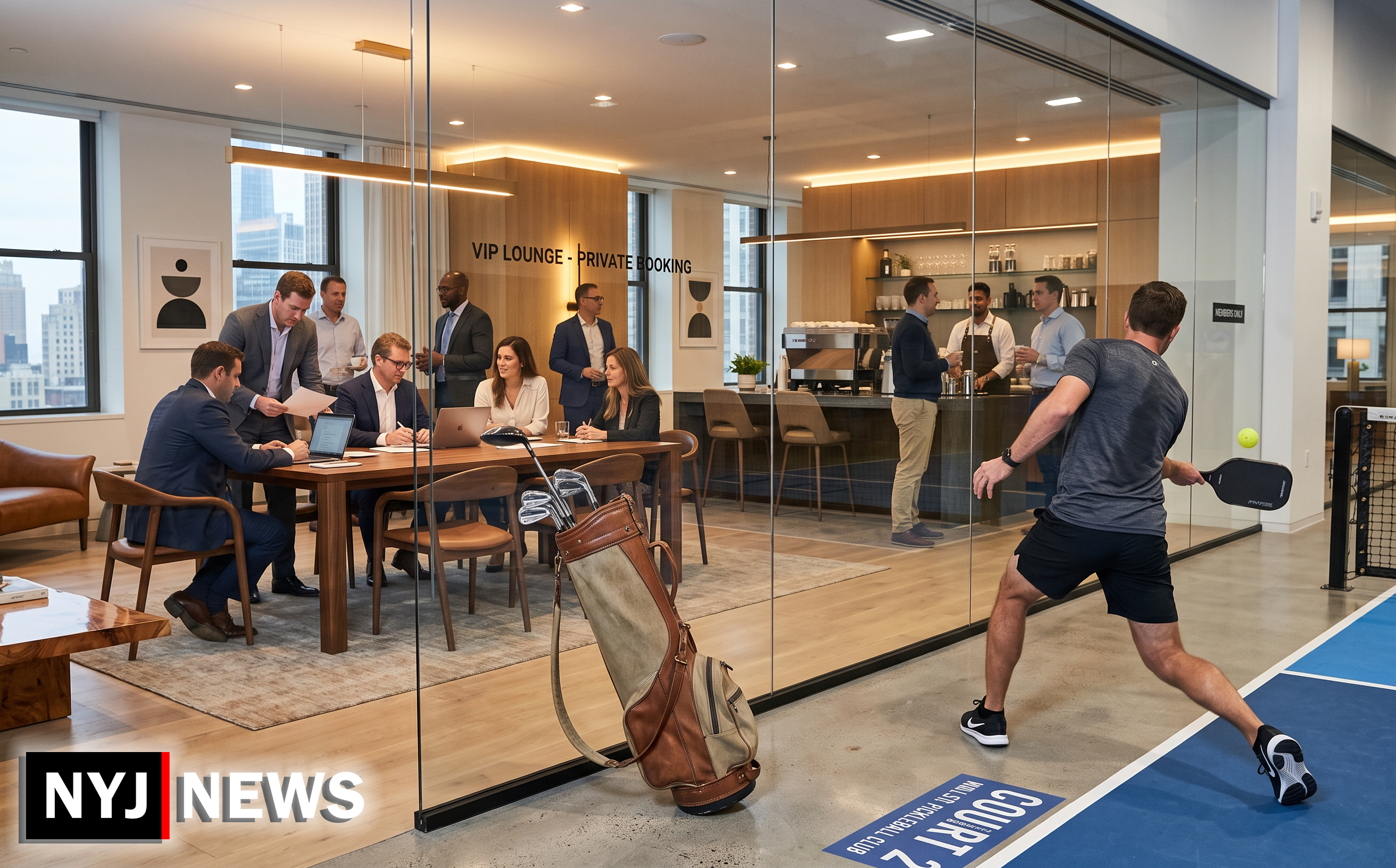

For decades, the unwritten rule of the New York business world was simple: if you wanted to close a lucrative deal, you took the client golfing. It meant sacrificing an entire Tuesday, paying five figures for a Hamptons country club membership, and pretending to enjoy a five-hour stroll across manicured grass.
Today? If you are hunting for seed funding for a tech startup or trying to lock down a whale of a client, you don’t need a set of custom Callaways. You need a carbon-fiber paddle and a perforated plastic ball. Welcome to the era of corporate pickleball.
The sport — which just a few years ago was largely relegated to the backyards of Florida retirees—has entirely colonized the city’s corporate elite. Courts at Chelsea Piers and newly minted indoor facilities in Brooklyn are routinely booked solid by venture capitalists, managing directors, and tech founders. This pivot from the green to the court isn’t a random fad; it is a highly pragmatic business calculation.
• The Return on Time: Golf takes five hours, factoring in the commute and the obligatory 19th-hole scotch. A pickleball match can be wrapped up in 45 minutes during a lunch break. In an accelerated economy, time is the ultimate luxury asset, and modern executives simply cannot afford to vanish from Slack for half a day.
• The Democratization of Networking: Golf has historically operated as a strict social filter—demanding expensive gear, years of pricey instruction, and exclusive access. Pickleball, conversely, can be learned in ten minutes with a $40 paddle. It erases hierarchical boundaries, allowing a junior analyst to rally fiercely against a CEO without the intimidation factor of a pristine country club.
• The Accelerated Character Test: Business leaders love sports because they reveal personality in real time. Founders and VCs alike argue that you can learn more about a potential partner in five minutes on a court than in five boardroom meetings. How do they handle a lost point? Do they play collaboratively, or do they aggressively poach every shot to stroke their own ego? Pickleball stress-tests character live and in public.
While traditional golf clubs grapple with an aging demographic, the business model of modern pickleball centers is aggressively adapting to the C-suite crowd. New Manhattan venues now feature VIP boardrooms, high-end espresso bars, and fiber-optic Wi-Fi—designed specifically so term sheets can be signed in a sweaty tech tee before the endorphins wear off.
The new generation of leaders has no interest in doing business at a quiet, formal, and agonizingly slow pace. They demand agility, accessibility, and immediate results. The traditional golf course handshake is officially a relic of the past; today’s millions are moving at the speed of a plastic wiffle ball.
Would you like to explore the shift in everyday office culture next, such as the rise of “coffee badging” among hybrid workers?